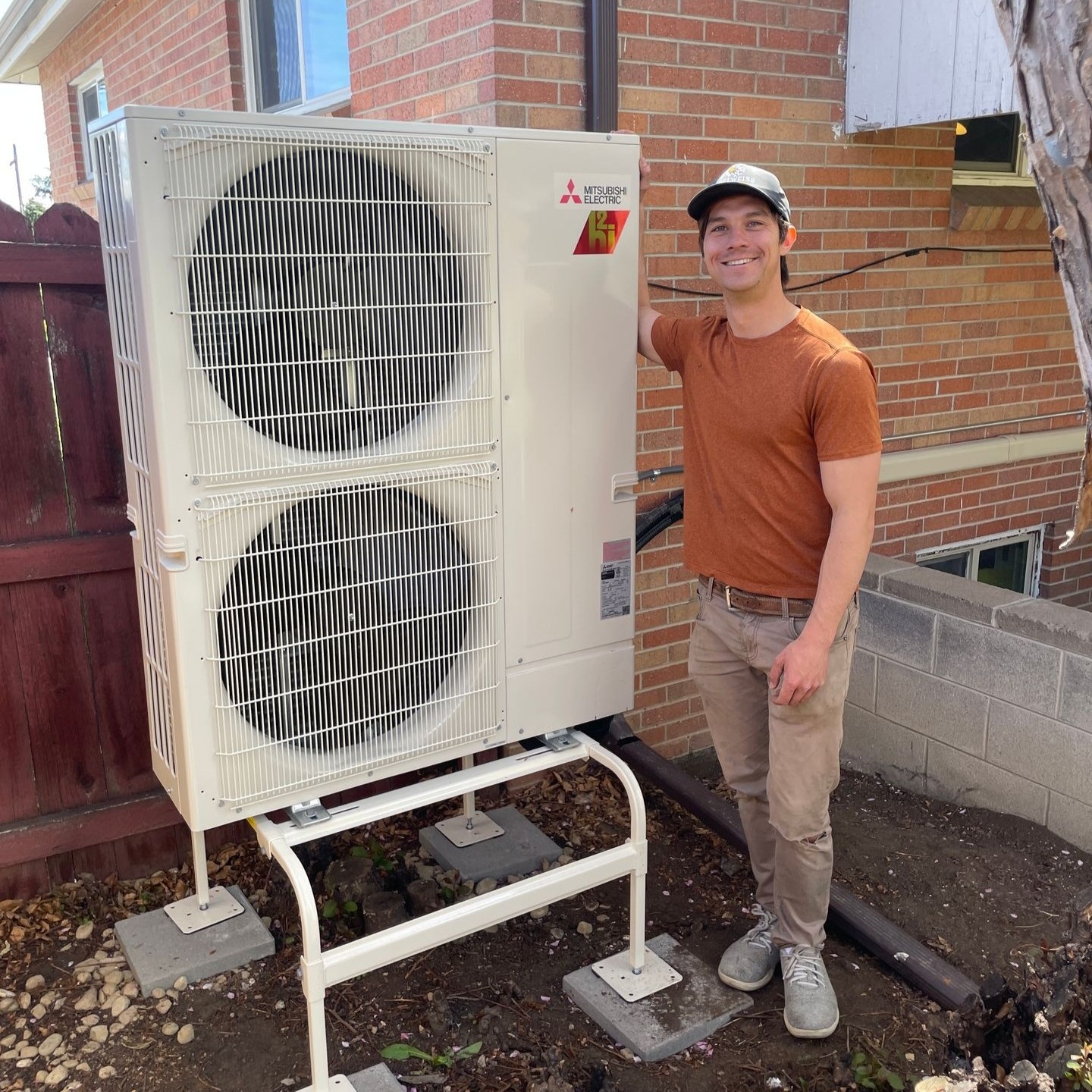
“There is a large improvement between what I was experiencing and what I can do now in the platform.”
— Stephen Hong, Electrify Colorado Mechanical
Results at a Glance
- Volume: 5-25 Xcel Energy rebate applications processed monthly
- Forms automated: CO Residential HVAC Rebates Application and 2025 Whole Home Efficiency Rebate Application
- Core problem solved: Eliminated repetitive manual entry of identical customer, equipment, and efficiency data across multiple rebate submissions
- Technical breakthrough: Field-level precision mapping ensures serial numbers, AHRI certificates, and efficiency ratings populate correct locations only—critical for utility compliance
- Industry context: Hundreds of HVAC contractors across Colorado filing identical forms daily for state energy efficiency programs
Executive summary
Electrify Colorado Mechanical installs heat pumps and heat pump water heaters across the Denver metropolitan area, participating in Xcel Energy’s residential HVAC rebate program. Like hundreds of contractors statewide, Stephen Hong files 5-25 rebate applications monthly (one for every installation) to help customers access utility incentives that make clean energy equipment affordable.
The rebate forms require identical administrative information across applications (customer details, contractor credentials, third-party processor data), plus technical equipment specifications that must match AHRI certificate numbers and efficiency ratings exactly. Utility compliance requires accuracy – incorrect SEER2, EER2, or HSPF2 values delay processing and payment.
After attempting to build internal automation for two months, Stephen discovered Instafill.ai. The solution addressed a challenge specific to utility rebate contractors: synthesizing technical data from multiple sources (invoices, equipment specifications, utility bills) into standardized forms while handling workflow constraints like customer signatures collected upfront on blank forms.
Client Overview
Electrify Colorado Mechanical is a Colorado-based HVAC contractor focusing on heat pump and water heater installations. Their operations involve submitting multiple detailed rebate forms to utility companies for each project to secure customer incentives.
The Challenge: Multiple Data Sources, Single Form
Stephen’s workflow involved gathering information from:
- Customer invoices containing equipment model numbers, AHRI certificates, pricing, installation dates
- Manufacturer specification sheets with detailed efficiency ratings and capacity data
- Utility bills providing account numbers and service addresses
- Customer contracts with contact information and property details
Each heat pump installation generated this multi-document set. The rebate form required synthesizing data from all sources into a single submission, but generic form-filling tools couldn’t handle the precision required.
The Serial Number Placement Problem
“In the past when we have given your company an invoice that says serial number and then a 10 digit serial number, the Instafill wants to put that serial number everywhere it says serial number on the form,” Stephen explained. “But instead we only want it in the place where it – we only want it in a specific field. We want it to be the heat pump serial number, the water heater serial number, or the furnace, and nowhere else.”
The rebate forms contain fields for multiple equipment types (heat pumps, water heaters, furnaces, boilers), but Electrify Colorado specializes in heat pump installations. Populating irrelevant fields with data or placing equipment specifications in the wrong locations triggers rejection by utility reviewers.
“The information already exists,” Stephen emphasized. “I’m just trying to automate the step of putting it all together.”
The Solution
After engaging with Instafill.ai, Stephen shared his use case with the team. The conversation revealed challenges specific to utility rebate processing that required tailored configuration rather than generic form filling. The conversation revealed challenges specific to utility rebate processing that required tailored configuration rather than generic form filling.
The implementation followed a collaborative troubleshooting process. Stephen provided:
- Blank CO Residential HVAC Rebates and Whole Home Efficiency forms
- Sample customer data in CSV format
- Completed rebate applications showing expected output
- Source documents (invoices, spec sheets) containing equipment data
Instafill.ai’s team analyzed form structures, identified accuracy issues, and tailored configurations to handle utility rebate requirements.
What Instafill.ai Changed
Form-Specific Field Mapping
Instafill worked on the actual PDFs Stephen provided – CO Residential HVAC Rebates Application and 2025 Whole Home Efficiency Rebate Application. The team adjusted the form logic so the filler ignores furnace/boiler sections, corrected cross-filling between customer and contractor details, and configured extraction so AHRI and efficiency ratings come directly from invoice/spec values when duplicates exist.
Data Format Optimization
Oleksandr identified a critical optimization: “If we can get it in a semi-structured or structured way, that would be easier because PDF is a binary format. We can handle that, but first, it takes more time for the AI and the error rate is higher.” Stephen agreed to export data as CSV from the NEIEP website, reducing parsing errors and processing time.
Hybrid Manual + AI Workflow
For single-value fields like utility account numbers, Instafill.ai team suggested: “If it’s just one number, sometimes it’s easier just to type the number instead of looking for that file, attaching that file, and making AI spend 30 more seconds parsing that file.” The AI handles 99% of fields automatically, with quick manual input reserved for specific cases.
Workflow Simplification
Stephen’s day-to-day flow also got simpler. He typically had customers sign a blank copy and filled details later; after testing the new setup, he decided to fill first and sign at the end, which aligns with how the packets are now produced.
“There is a large improvement,” Stephen wrote after trying the updated forms.
Outcomes
The key value delivered is predictable, accurate packet processing and faster turnaround. Customer and provider details consistently populate the same locations across forms in the submission packet. Equipment model numbers and efficiency ratings reliably match source documents. Batch processing of spreadsheets generates submission-ready PDFs per job, eliminating manual editing.
Most importantly: Stephen stopped re-entering the same information multiple times. The data he already documents as part of normal business operations now flows automatically into rebate forms with field-level precision.
Industry-Wide Relevance
Stephen’s use case represents a pattern affecting hundreds of Colorado HVAC contractors. The same Xcel Energy forms are filed daily across the state. Every heat pump installer faces identical challenges – multiple data sources, technical specifications requiring accuracy, workflow constraints around customer signatures.
The CO Residential HVAC Rebates Application is standardized across the state to support scalable utility rebate programs. Solutions proven for individual contractors like Electrify Colorado Mechanical provide benefits across the broader industry.